
Planning a trip should be exciting, but for many dog owners, it comes with a wave of guilt. The thought of leaving your best friend behind in a cold, lonely cage can be heart-wrenching, sparking worries that they’ll be stressed, bored, and unhappy while you’re away. Thankfully, the world of pet boarding has evolved far beyond basic enclosures. Modern dog hotels now offer everything from private suites and group playtimes to spa services, promising a true vacation experience for your pup.
But with so many options, how do you decide? What’s the real difference between a traditional kennel and a luxury pet resort, and is the extra cost actually worth it? In this guide, we’ll help you confidently navigate your choices. We’ll break down the key distinctions in accommodation, daily activities, safety, and overall value. By the end, you’ll have the clarity you need to choose the perfect, stress-free environment that matches your dog’s unique personality and gives you complete peace of mind on your travels.
What is a Dog Hotel? A Modern Approach to Pet Boarding
When you think of boarding your furry family member, you might picture a traditional kennel with rows of concrete and chain-link runs. While that model focuses on basic safety and containment, the industry has evolved. So, what is a dog hotel? It represents a significant shift in philosophy-moving beyond simple lodging to providing a holistic, enriching experience designed to minimize stress and maximize comfort.
The core principle behind modern dog hotels is to create an environment that feels more like a vacation and less like a confinement. This approach prioritizes your pet’s emotional and physical well-being through higher engagement, personalized attention, and a setting that mimics the comforts of home. Instead of anxious days spent waiting, dogs enjoy a structured yet fun-filled stay.
Luxury Accommodations and Comfort
A key difference lies in the living quarters. Forget cold, sterile cages. Premier facilities offer private suites or cozy rooms complete with comfortable, orthopedic bedding, soothing ambient music, and carefully regulated climate control. Many even provide webcam access, allowing you to check in on your pup and see them relaxing in their temporary home, giving you unparalleled peace of mind.
Personalized Care and Enrichment Activities
True premium care goes beyond a nice room. A lower staff-to-dog ratio ensures every guest receives individual attention. Routines are often tailored to your dog’s specific needs, energy levels, and personality-not the other way around. Days are filled with enrichment activities designed to engage their minds and bodies, such as:
- Supervised group play sessions in secure indoor and outdoor areas.
- One-on-one time with staff for cuddles, fetch, or belly rubs.
- Brain games and puzzle toys to prevent boredom.
- Relaxing downtime to ensure they don’t get overstimulated.
This focus on personalized engagement ensures your dog returns home happy, healthy, and well-cared-for, making dog hotels the preferred choice for discerning pet parents.
The Traditional Dog Kennel: Understanding the Standard Model
For decades, the traditional dog kennel has been the go-to solution for pet owners needing to board their dogs. Its design philosophy is rooted in providing a safe, secure, and controlled environment where a dog’s basic needs-food, water, shelter, and sanitation-are consistently met. Before exploring the world of modern dog hotels, it’s essential to understand this foundational model. High-quality kennels are clean, well-managed facilities run by dedicated professionals. Understanding the benchmarks for animal welfare is a key part of any Head-to-Head Comparison: Dog Hotel vs. Traditional Kennel, as outlined by leading veterinary organizations.
The Kennel Environment and Structure
The physical layout of a traditional kennel is built for function. You’ll typically find rows of individual enclosures, often constructed with durable materials like concrete floors and chain-link or solid panel fencing. This design serves a crucial purpose: it prevents the spread of illness, is easy to clean and disinfect, and ensures each dog has a secure, private space. However, for some dogs, this environment can be stressful. The hard surfaces can amplify noise from barking, and the limited social interaction may cause anxiety for more social or sensitive pets.
A Typical Daily Routine in a Kennel
Life in a kennel is highly structured to ensure efficiency and safety for a large number of animals. A typical day follows a strict schedule:
- Morning: Early potty breaks, followed by feeding in individual enclosures.
- Mid-day: Staff clean and sanitize each run while dogs are temporarily moved. Playtime is often individual in an attached outdoor run or in short, scheduled sessions with a few compatible dogs.
- Evening: A second feeding, followed by a final potty break before settling in for the night.
This predictable routine provides stability, but it differs significantly from the more flexible, socially-focused atmosphere found in cage-free dog hotels, where open-play sessions often last for hours.
Head-to-Head Comparison: Dog Hotel vs. Traditional Kennel
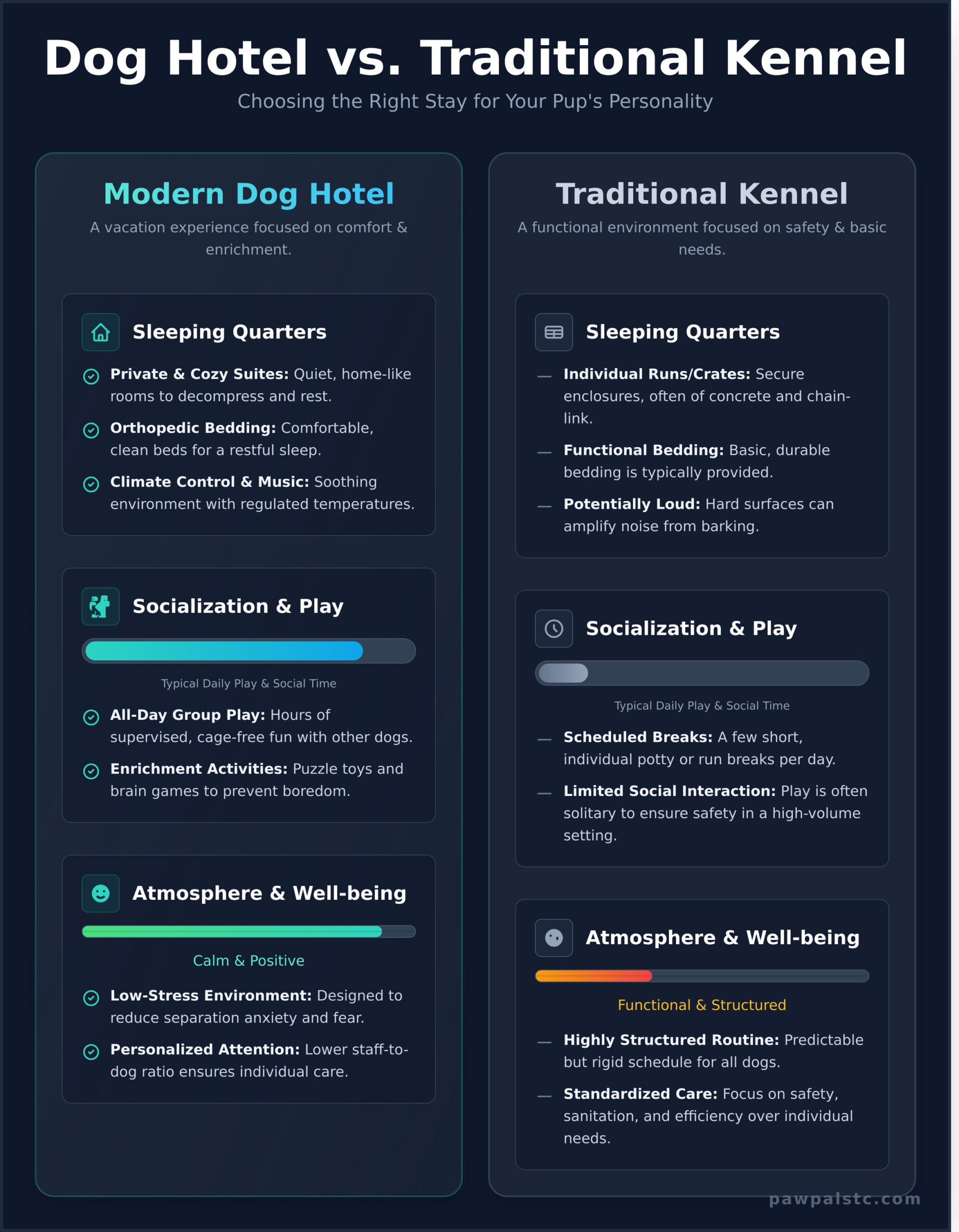
Choosing where to board your furry family member is a major decision. While both traditional kennels and modern dog hotels aim to provide a safe space, the experience they offer can be worlds apart. Understanding the key differences is crucial for matching your dog’s personality and needs with the right environment, ensuring your peace of mind while you’re away.
Sleeping Quarters: Suites vs. Runs
A traditional kennel typically houses dogs in individual runs or crates, often made of concrete and chain-link. While functional, this environment can be loud and stressful, with the constant barking and visibility of other dogs causing anxiety. In contrast, a dog hotel offers private or semi-private suites designed for comfort. These rooms often feature cozy beds, quieter surroundings, and a more home-like feel, allowing your dog to decompress and get a truly restful night’s sleep.
Socialization and Playtime: All-Day Play vs. Scheduled Breaks
One of the most significant differences lies in the approach to exercise and enrichment. Kennels generally provide scheduled, individual time in an outdoor run a few times a day. While this meets basic needs, it lacks social interaction. Dog hotels are built around a cage-free, open-play model where dogs spend most of their day socializing with other pups in a supervised group setting. This constant engagement provides vital mental stimulation and physical activity, preventing boredom and separation anxiety.
Atmosphere and Overall Experience
Ultimately, the choice comes down to the kind of experience you want for your pet. A traditional kennel provides safe, basic lodging. A dog hotel aims to provide a vacation. The atmosphere in a kennel-free facility is calmer and more positive, which is especially beneficial for anxious or sensitive dogs. Knowing the key factors of how to choose a dog kennel or hotel helps you make an informed decision that leads to a happy, relaxed, and well-cared-for companion upon your return.
| Feature | Dog Hotel (Kennel-Free) | Traditional Kennel |
|---|---|---|
| Sleeping Area | Private suites with comfortable beds. | Individual runs or crates, often concrete/chain-link. |
| Play & Socialization | All-day supervised group play. | Scheduled, often solitary, exercise breaks. |
| Atmosphere | Home-like, low-stress, and focused on enrichment. | Functional, can be loud and stressful for some dogs. |
| Staff Interaction | High level of hands-on interaction and supervision. | Primarily for feeding, cleaning, and scheduled walks. |
For many owners, the enhanced comfort, socialization, and personalized attention make a kennel-free facility the clear choice for their best friend’s well-being. Ready to give your dog a true home-away-from-home experience? Learn more about the Paw Pals TC approach to boarding.
How to Choose the Right Option for Your Dog
Finding the perfect boarding facility isn’t about fancy lobbies or brand names; it’s about finding the right fit for your dog’s unique needs. The best choice depends entirely on their personality, age, and health. To make an informed decision, you need to think like your pup and evaluate potential options from their perspective. We always recommend scheduling a facility tour before booking to see the environment firsthand and meet the staff who will be caring for your family member.
Assess Your Dog’s Personality and Social Needs
Start by honestly evaluating your dog’s temperament. Is your dog a social butterfly who lives for the dog park, or a shy wallflower who is easily overwhelmed by noise and activity? Answering these questions will help you match them with the right environment:
- Is your dog a social butterfly who loves group play? A kennel-free, open-play setting where they can interact with other dogs under supervision would be ideal.
- Is your dog anxious or easily stressed? Look for facilities that offer quieter spaces and a more structured, predictable routine to help them feel secure.
- Does your dog have high energy levels? Ensure the facility provides ample time for structured activities and play to prevent boredom and frustration.
Consider Age, Health, and Special Requirements
A dog’s life stage and health are critical factors. Senior dogs may require orthopedic bedding and a peaceful atmosphere away from rambunctious puppies. Puppies, on the other hand, thrive with structured socialization and consistent potty training reinforcement. If your dog needs daily medication, has allergies, or follows a special diet, it’s crucial to confirm the facility has strict protocols to manage their specific health needs accurately and safely.
Why a Kennel-Free ‘Hotel’ is the Paw Pals TC Way
We believe the best dog hotels offer more than just a place to sleep-they provide a genuine home-away-from-home. At Paw Pals TC, we’ve built our kennel-free environment to eliminate the stress and isolation of a traditional, sterile facility. Our expertly supervised group play ensures your dog remains happy, engaged, and properly socialized throughout their stay. From playful puppies to serene seniors, we provide the personalized care and comfortable setting every dog deserves. See why Port St. Lucie dog owners trust us.
Choosing the Best Stay for Your Best Friend
Ultimately, the decision between a traditional kennel and a modern boarding facility comes down to your dog’s individual needs, personality, and comfort. The key is to match the environment to your pet, whether they thrive in a structured setting or prefer the social, amenity-rich atmosphere of dog hotels. Your peace of mind and your dog’s happiness are the most important factors.
When you want the best of both worlds-professional expertise and a loving, home-like environment-consider Paw Pals TC. With over 20 years of professional pet care experience, we offer personalized care tailored to make every dog feel comfortable and happy. Our safe, secure double-fenced yard provides the perfect space for play and relaxation. We’re dedicated to ensuring your pet is not just watched over, but truly cared for.
Ready to give your dog a vacation they’ll love? Book a happy and stress-free stay for your best friend at Paw Pals TC!
Frequently Asked Questions About Dog Hotels
Are dog hotels significantly more expensive than traditional kennels?
Dog hotels often have a higher price point than traditional kennels, but this reflects a premium, all-inclusive experience. The cost typically covers cage-free group play, comfortable sleeping suites instead of cages, and higher staff-to-dog ratios. When you factor in add-ons that many kennels charge for, like individual playtime or walks, the price difference may not be as significant. It’s an investment in your dog’s comfort, socialization, and overall well-being while you are away.
My dog has separation anxiety. Is a dog hotel a better choice for them?
For a dog with separation anxiety, a kennel-free environment is often a much better choice. The constant social interaction with other dogs and attentive staff can help keep their minds occupied and reduce stress. Instead of being confined to a small run, they can play and relax in a more home-like setting. This structure and companionship can significantly ease the anxiety they feel when separated from you, making their stay a positive and enriching experience.
What questions should I ask when touring a dog boarding facility?
During your tour, inquire about their specific policies and procedures to ensure a good fit. Key questions include: What is the staff-to-dog ratio during playtime? What are your emergency protocols and do you have a vet on call? How are dogs separated by size and temperament? Can I see the exact area where my dog will be sleeping and playing? Also, ask about their cleaning and sanitation routines to ensure a healthy environment for all the furry guests.
How can I prepare my dog for their first stay at a dog hotel?
To prepare your dog, start with a trial visit, such as a half-day of daycare. This allows them to get familiar with the environment, staff, and other dogs before an overnight stay. Pack their regular food to avoid digestive upset, along with a familiar item like a small blanket or a t-shirt with your scent. When you drop them off, keep your goodbye brief and positive to avoid transferring any of your own anxiety to your dog.
Are the staff at dog hotels trained to handle different dog breeds and temperaments?
Absolutely. The staff at high-quality dog hotels are typically required to have specialized training. This often includes certifications in pet first aid and CPR, as well as extensive knowledge of dog behavior and body language. They are trained to safely manage group play, recognize signs of stress or illness, and handle dogs of various breeds and temperaments. This expertise ensures your pet is not just supervised, but cared for by knowledgeable professionals who prioritize their safety.
What vaccination records are typically required for boarding at a dog hotel?
To ensure the health and safety of all guests, boarding facilities require up-to-date vaccination records from a licensed veterinarian. Typically, this includes proof of Rabies, DHPP (Distemper, Hepatitis, Parainfluenza, and Parvovirus), and Bordetella (kennel cough). Some facilities may also require the Canine Influenza vaccine. It’s crucial to check with the specific facility well in advance of your dog’s stay to ensure you have all the necessary paperwork and your dog is fully protected.