
Planning a trip should be exciting, but for many dog owners, it comes with a wave of anxiety. Will my best friend be lonely? Are they safe? The thought of leaving them behind, especially for the first time, can be enough to overshadow any vacation plans. You worry about them being cooped up in a cage, the cleanliness of the facility, and whether they’ll receive the same love and attention they get at home.
Finding the right dog boarding solution is the key to transforming that worry into complete peace of mind. This guide is your roadmap to a stress-free experience for both you and your pup. We’ll walk you through everything-from the crucial questions to ask during a tour and how to spot a top-tier facility, to preparing your dog for their stay and packing the perfect comfort kit. Get ready to find a home-away-from-home where your dog won’t just be looked after, but will be happy, engaged, and expertly cared for.
What is Dog Boarding? Understanding Your Options
When you need to travel, finding the right care for your four-legged family member is a top priority. So, what is dog boarding? It’s a professional service that provides safe, supervised overnight care for your dog in a dedicated facility. Unlike a pet sitter who comes to your home, a boarding facility offers a structured environment designed specifically for dogs, ensuring their needs are met around the clock. The primary goal is to give you peace of mind, knowing your pup is secure, engaged, and well-cared for while you’re away.
Many owners worry that boarding facilities are just rows of cold cages. While that may have been true in the past, the industry has evolved significantly. Today, you have more options than ever, from traditional setups to modern, home-like environments.
Traditional Kennels vs. Home-Style Facilities
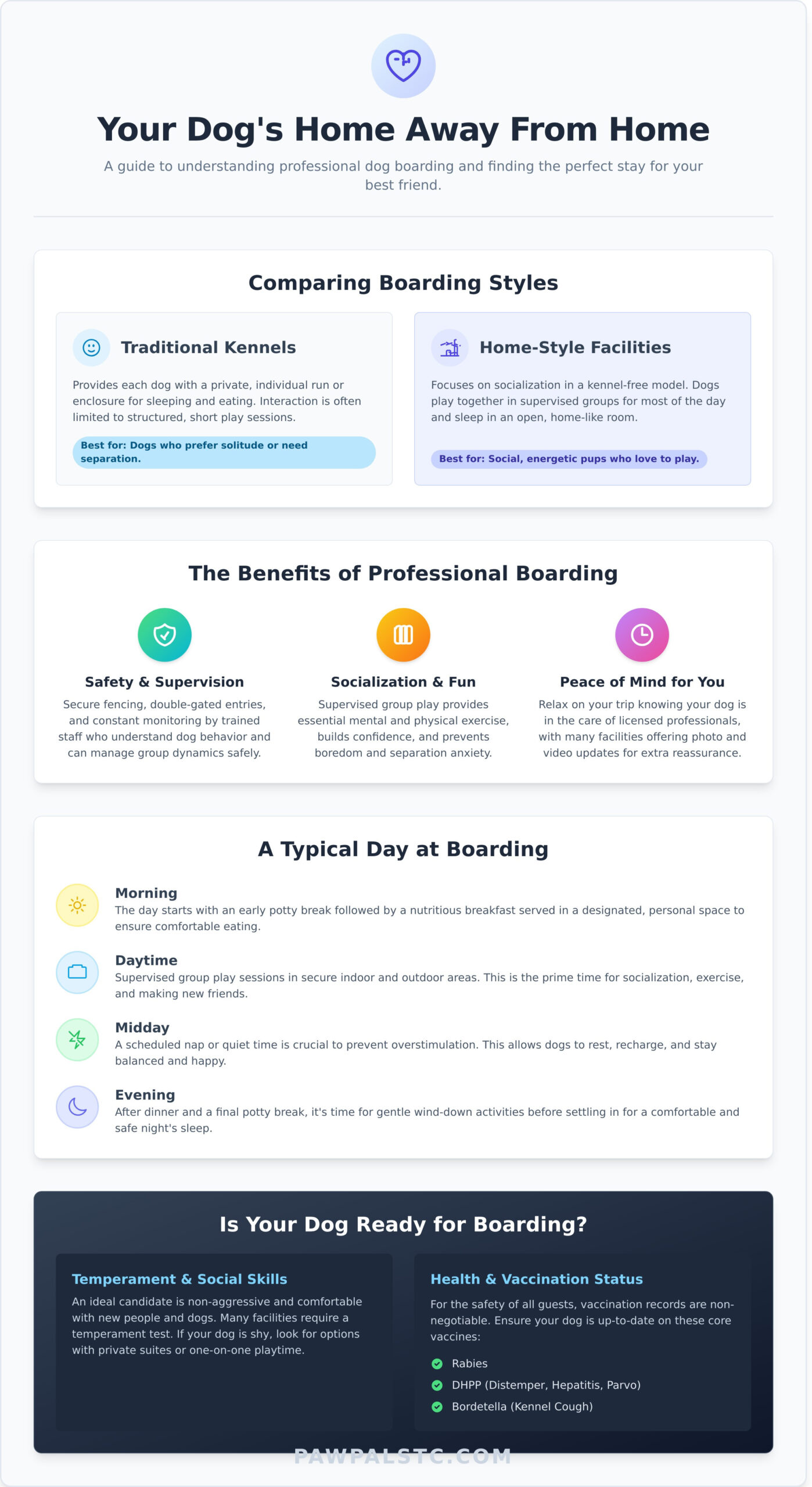
A traditional kennel typically provides each dog with a private, individual run or enclosure for sleeping and eating. While they ensure personal space, interaction with other dogs may be limited to specific, short-term play sessions. This option can be suitable for dogs who prefer solitude or require separation from others.
In contrast, home-style boarding focuses on socialization and comfort. In this kennel-free model, dogs often play together in supervised groups for most of the day and sleep in a communal, open room with comfortable beds. This approach aims to reduce stress by mimicking a familiar home environment, making it a fantastic choice for social, energetic pups.
What to Expect from a Typical Boarding Stay
A reputable dog boarding facility operates on a structured schedule to keep dogs happy and comfortable. A typical day is designed to balance activity with crucial rest periods. While every facility is different, you can generally expect a routine that includes:
- Morning: An early potty break followed by breakfast in a designated space.
- Daytime: Supervised group play sessions in secure indoor and outdoor areas, allowing for socialization and exercise.
- Midday: A scheduled nap or quiet time to prevent overstimulation and allow dogs to recharge.
- Evening: Dinner, another potty break, and some gentle wind-down time before bed.
Throughout the day, trained staff provide constant monitoring, affection, and care, ensuring every dog is safe, healthy, and enjoying their stay.
The Key Benefits of Professional Dog Boarding
When planning a trip, many pet owners wonder, “Why shouldn’t I just ask a friend or neighbor to watch my dog?” While well-intentioned, this option often can’t compare to the comprehensive care, safety, and enrichment provided by a professional facility. Choosing a dedicated dog boarding service isn’t just about convenience; it’s an investment in your pet’s well-being and your own peace of mind.
Safety, Security, and Supervision
A professional facility is designed from the ground up for canine safety. Unlike a typical home, it includes features specifically meant to prevent accidents and escapes. The staff’s expertise is the most critical safety layer-they are trained to understand dog behavior, manage group dynamics, and spot subtle signs of distress before a problem arises. This constant, knowledgeable supervision ensures your pet is truly looked after.
- Secure Environments: Facilities feature high, dig-proof fencing and double-gated entry systems to prevent escapes.
- Trained Professionals: Staff members know how to safely administer medications, follow specific dietary plans, and execute established emergency protocols.
- Health and Hygiene: Reputable kennels enforce strict vaccination and sanitation policies to protect the health of all visiting dogs.
Socialization and Mental Stimulation
Dogs are social animals that thrive on interaction and engagement. Being left alone at home for long stretches, even with brief check-ins, can lead to boredom, separation anxiety, and destructive behaviors. Professional boarding provides a structured and stimulating environment where your dog can enjoy supervised group play. This interaction with new canine friends builds confidence, reinforces good social manners, and provides essential physical and mental exercise, ensuring they return home happy and tired.
Peace of Mind for You
Perhaps the greatest benefit of quality dog boarding is for you, the owner. Instead of worrying if your friend remembered to give your dog their medication or if your pet is feeling lonely, you can relax and fully enjoy your trip. Knowing your furry family member is in the hands of licensed, experienced professionals is invaluable. Many facilities even offer photo and video updates, so you can see your happy pup playing and thriving. Travel stress-free. Learn about our safe environment at Paw Pals TC.
Is Your Dog a Good Candidate for Boarding?
Deciding to board your dog involves more than just finding a great facility; it’s about ensuring the environment is a good match for your pet’s unique personality and needs. While most dogs adapt wonderfully to a well-run kennel, taking a moment to assess your dog’s suitability will help ensure they have a safe, comfortable, and positive experience. Consider this a checklist to help you make the best choice for your furry family member.
Temperament and Social Skills
A dog’s temperament is the most critical factor. Reputable facilities often require a temperament test or an initial assessment day to see how your dog interacts with staff and other animals. An ideal candidate is generally comfortable and non-aggressive around new people and other dogs. If your dog is shy or anxious, look for a dog boarding facility that offers private suites or one-on-one playtime with staff instead of large group play sessions.
Health and Vaccination Requirements
For the safety of all canine guests, boarding facilities have strict health and vaccination rules. These are non-negotiable and protect your dog from communicable illnesses. Before booking, ensure your dog is up-to-date on all required shots. Have your veterinarian’s records handy, as you will need to provide proof of vaccination for:
- Rabies: Required by law in most areas.
- DHPP (or DAPP): Protects against Distemper, Hepatitis, Parainfluenza, and Parvovirus.
- Bordetella: Often called “kennel cough,” this is crucial for dogs in social settings.
Handling Special Needs and Separation Anxiety
Honesty is the best policy when it comes to your dog’s unique needs. Top-tier facilities are well-equipped to care for senior dogs needing extra-soft bedding, puppies on a specific feeding schedule, or dogs requiring daily medication. If your dog has mild separation anxiety, ask about a trial run, like a half-day of daycare or a single overnight stay. Clearly communicating all health issues, dietary restrictions, and behavioral quirks to the staff is essential for a successful stay.
With thoughtful preparation and an honest assessment of your dog’s needs, you can find a boarding environment where they will not just be cared for, but will truly thrive.
How to Prepare Your Dog for a Successful Stay
A little preparation can make a world of difference in ensuring your dog has a comfortable and enjoyable time away from home. Following a few simple steps before drop-off helps minimize stress for both you and your pup, setting the stage for a positive first experience and a happy reunion.
The Importance of a Trial Visit or Daycare Day
If your dog is new to dog boarding or has an anxious temperament, we highly recommend a trial visit. A half-day or full day of daycare allows your dog to become familiar with the new environment-the sounds, smells, and friendly faces of our staff-before an overnight stay. It also gives our team a chance to see how your dog interacts with the group, ensuring they will be comfortable and safe. Contact us to schedule an introductory visit!
Packing the Essentials (and What to Leave at Home)
To keep your dog healthy and happy, it’s important to pack the right items. We provide clean bedding, bowls, and plenty of toys, so you only need to bring the personal necessities.
- Must-Haves: Your dog’s regular food, pre-portioned by meal in disposable bags to prevent stomach upset. Bring any necessary medications with clear, written instructions. Your dog should also arrive wearing a well-fitting collar with ID tags.
- Optional Comforts: A small, unwashed t-shirt or blanket that smells like you can provide comfort and familiarity in a new space.
- What to Leave Behind: Please leave large beds, favorite toys, and food bowls at home. Shared environments can lead to items getting lost or damaged, and we have everything your dog needs to be comfortable.
The Drop-Off: Keeping it Calm and Positive
Your dog takes cues from you. If you are anxious or emotional during drop-off, your dog will likely feel the same way. We know saying goodbye is tough, but a long, drawn-out farewell can increase separation anxiety. The best goodbyes are short, sweet, and cheerful.
Hand the leash over to a staff member with a confident smile, give your dog a quick pat, and say, “See you soon!” Trust our professional team to take it from there. A calm and positive departure tells your dog that this is a safe and fun place to be.
Your Dog’s First Stay: What to Expect During and After
You’ve done the research, packed the bags, and chosen the perfect facility. Now, what actually happens during and after your dog’s first stay? Understanding what to expect can ease your mind and help you recognize the signs of a happy, well-cared-for pup upon your return. This final step ensures a smooth transition from their vacation back to home life.
Communication While You’re Away
Gone are the days of wondering how your dog is doing. Reputable facilities understand that peace of mind is paramount for owners. Most modern kennels offer regular updates, sending photos and videos of your pup playing with new friends, enjoying activities, or relaxing. These updates may come via text, email, a private app, or social media posts. Before you leave, always ask about the facility’s specific communication policy so you know when and how you’ll hear from them.
The Pick-Up and Reunion
Get ready for one of the best moments: the reunion! Your dog will be overjoyed to see you. Don’t be surprised by a flurry of happy wiggles, licks, and jumps. When you arrive for pick-up, a staff member should give you a brief report on how the stay went, covering details like their appetite, energy levels, and who their favorite playmates were. This “report card” is a great sign of an attentive and caring team.
Behavior After Boarding: The ‘Vacation Hangover’
It’s very common for dogs to experience a “vacation hangover” after a fun-filled dog boarding trip. They’ve been in a new environment with constant mental and physical stimulation. If you notice any of the following, don’t worry-it’s usually a sign they had a fantastic time:
- Excessive Sleeping: Your dog may be exhausted and sleep for a day or two. All that playtime, socializing, and excitement is tiring!
- Increased Thirst: Playing hard means drinking hard. They may be extra thirsty when they get home, so keep their water bowl full.
- Eating Quickly or Slowly: A change in routine can temporarily alter their eating habits. They should return to normal within a day.
These behaviors are completely normal and show that your dog had an engaging and active stay. A great dog boarding experience provides a safe, fun adventure for your pet, giving you the freedom to travel without worry. Have questions about your dog’s first stay? Contact our caring team in Port St. Lucie.
Your Partner for a Pawsitively Perfect Stay
Leaving your furry friend behind doesn’t have to be stressful. As we’ve covered, the key to a positive experience lies in understanding your options and properly preparing your dog for their time away. When you choose the right professional dog boarding facility, you’re not just finding a place for them to stay-you’re providing a safe, stimulating, and comfortable environment where they can thrive while you’re gone.
At Paw Pals TC, we combine over 20 years of licensed, professional experience with a genuine love for animals. We are proud to offer a truly safe, kennel-free, home-like environment where your dog can relax and play in our secure, double-fenced backyard under careful supervision. We believe that peace of mind comes from knowing your pet is treated like family, and we invite you to see the difference for yourself.
Ready to give your pet a vacation of their own? Book a tour and see why dogs love our home-away-from-home in Port St. Lucie! Travel with complete confidence, knowing your beloved companion is in the most loving and capable hands.
Frequently Asked Questions About Dog Boarding
How much does dog boarding typically cost?
The cost of overnight dog boarding can vary widely, typically ranging from $40 to $75 per night. Prices depend on your location, the facility’s amenities, and the size of your dog. Luxury kennels with private suites and webcams will be at the higher end, while more standard facilities offer a more budget-friendly option. Always ask about package deals or discounts for extended stays to find the best value for your needs.
What vaccinations are required for my dog to be boarded?
Most boarding kennels require proof of current vaccinations to ensure the health and safety of all canine guests. The standard required vaccines include Rabies, DHPP (Distemper, Hepatitis, Parainfluenza, and Parvovirus), and Bordetella (kennel cough). Some facilities may also require the canine influenza vaccine. It’s crucial to check with your specific facility for their exact requirements and to have your vet records ready well before your dog’s stay.
What happens if my dog gets sick or has a medical emergency while boarding?
Reputable facilities have strict protocols for medical emergencies. Staff will first attempt to contact you and your designated emergency contact. If you are unreachable, they will contact your primary veterinarian. For urgent situations, they will transport your dog to the nearest emergency veterinary hospital for immediate care. Be sure to provide the facility with all necessary contact information and consent forms for medical treatment before you leave.
Can I bring my dog’s own food, bed, and toys?
Yes, most facilities encourage you to bring your dog’s own food to maintain their regular diet and prevent digestive issues. You can often bring a favorite bed or a few toys to help them feel more at home. However, make sure all items are clearly labeled with your dog’s name. Avoid bringing irreplaceable items, as they can sometimes get lost or damaged during group play or cleaning routines.
How do you handle dogs that don’t get along with others?
A professional boarding facility will assess your dog’s temperament upon arrival. Dogs that are shy, elderly, or do not enjoy group settings are given special accommodations. This typically includes individual playtime with staff members in a separate, secure yard and private walks. Their comfort and safety are a top priority, ensuring they have a positive, stress-free experience away from the main playgroups.
Will my dog be in a cage all day?
No, your dog will not be confined to a cage all day at a quality facility. Dogs are typically housed in individual kennels or private suites for sleeping, eating, and quiet rest periods. The majority of their day is spent in supervised activities, such as group play in secure indoor/outdoor yards or individual walks and one-on-one time with staff. This structure ensures they get plenty of exercise and socialization during their stay.